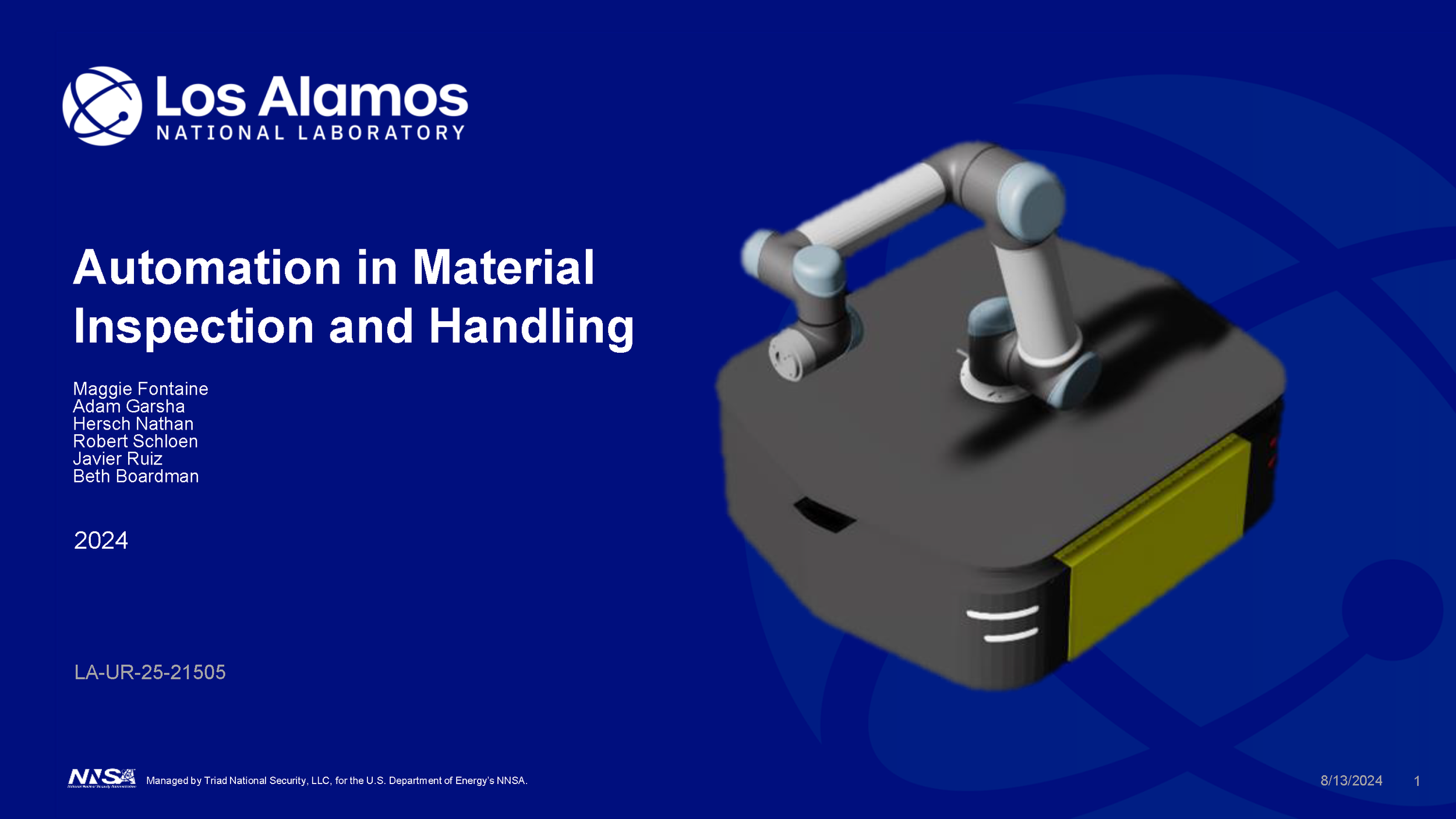
Robotic Integrated Mobile System for Material Inspection and Handling
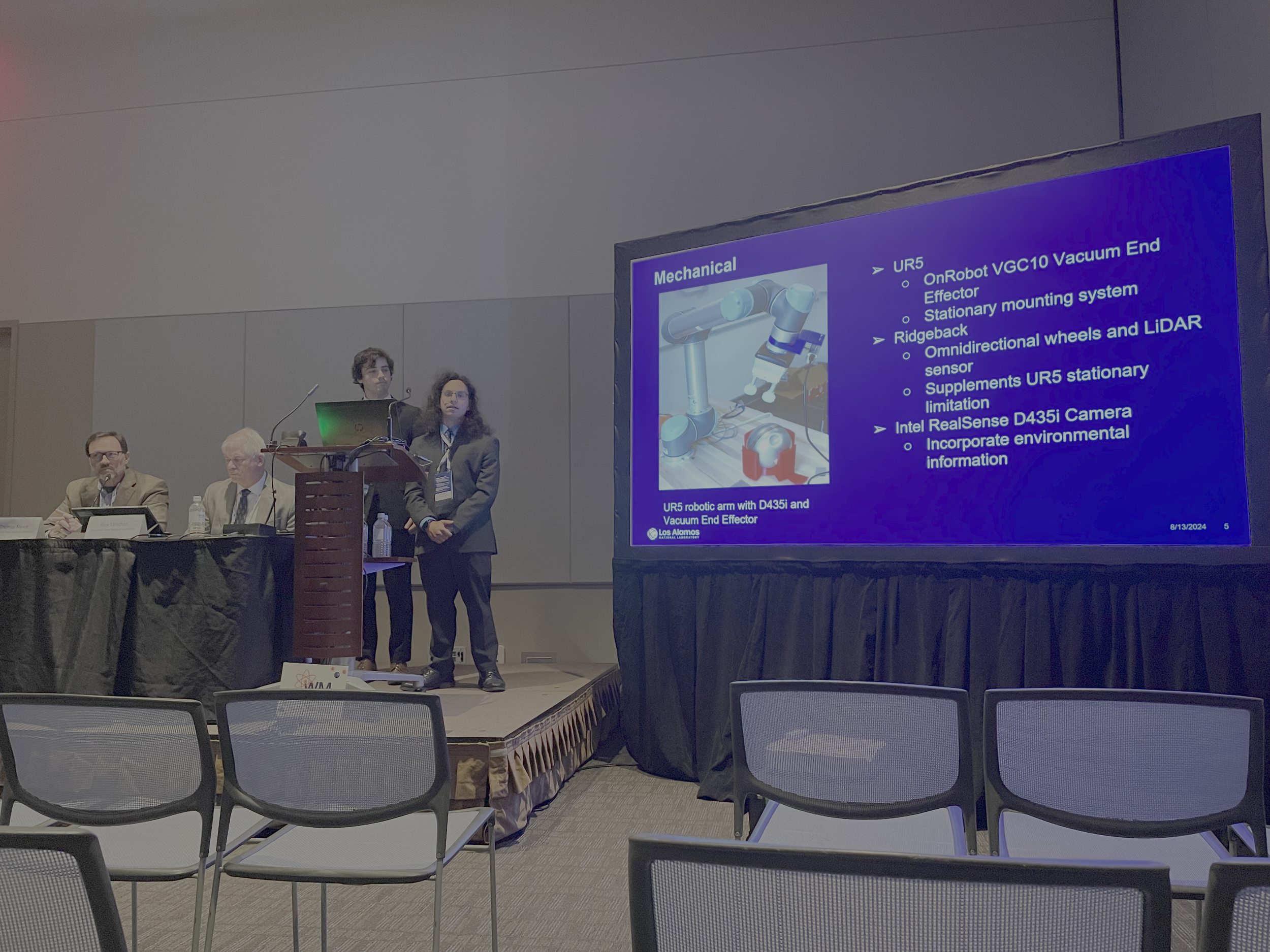
Presented at Waste Management Symposia 2025, Paper published in Conference Proceedings
Abstract:
The mission of the Los Alamos National Laboratory (LANL) is to ensure national security through deterrence. In the course of meeting LANL’s mission, workers handle hazardous materials which can have safety concerns. Improving worker safety requires advancing the use of automation and robotics technology at LANL. This project aims to adapt two commercial-off-the-shelf (COTS) robots for material handling.
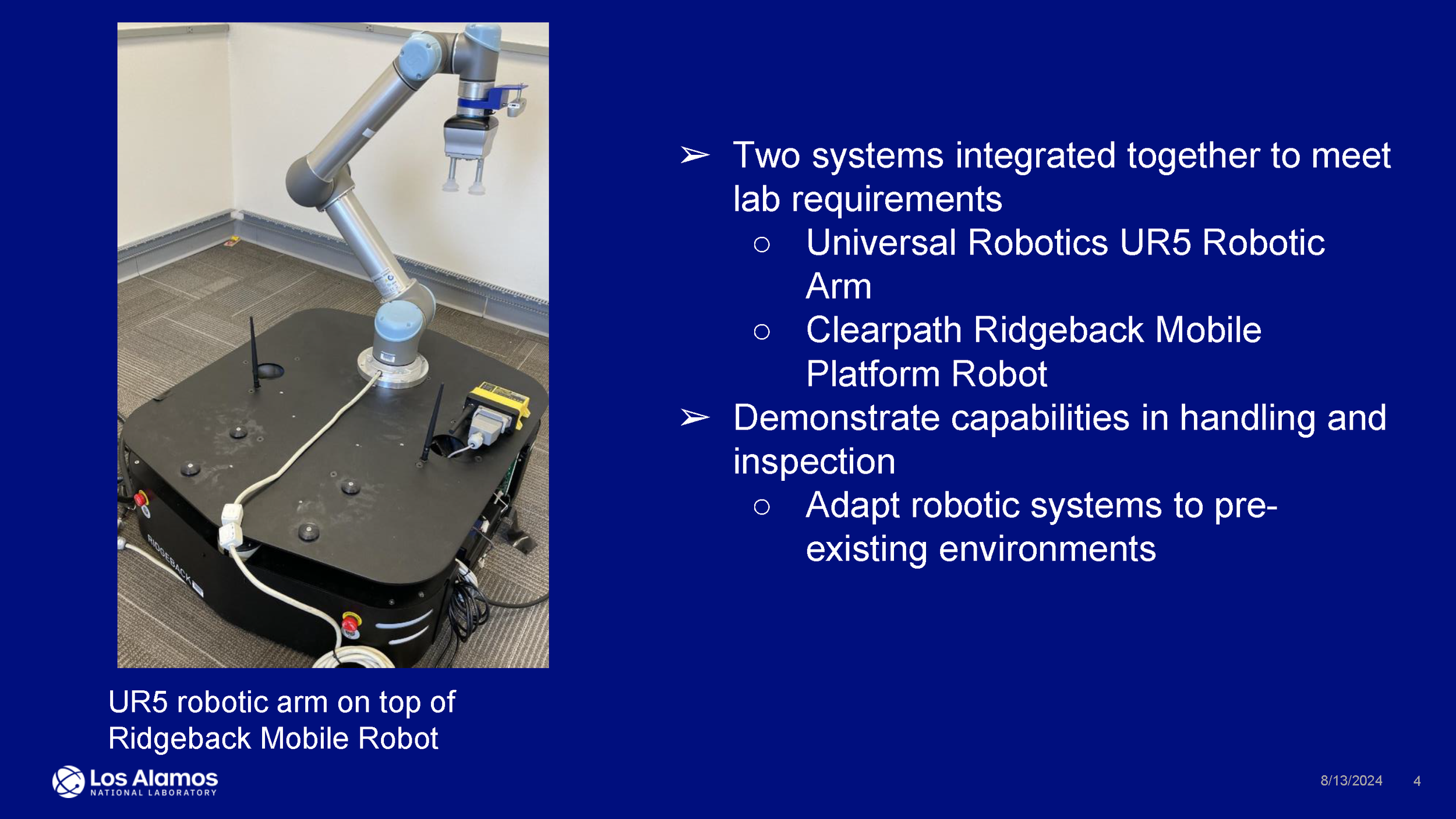
Specifically, this project implements two different types of COTS robots: the Clearpath Ridgeback mobile platform robot and the Universal Robots UR5 six-axis robotic arm. These systems each provide a unique set of industrial capabilities that complement each other. First, this paper describes the mechanical and electrical integration of both robots. Then, a material handling demonstration is used to show how automation can improve processes.
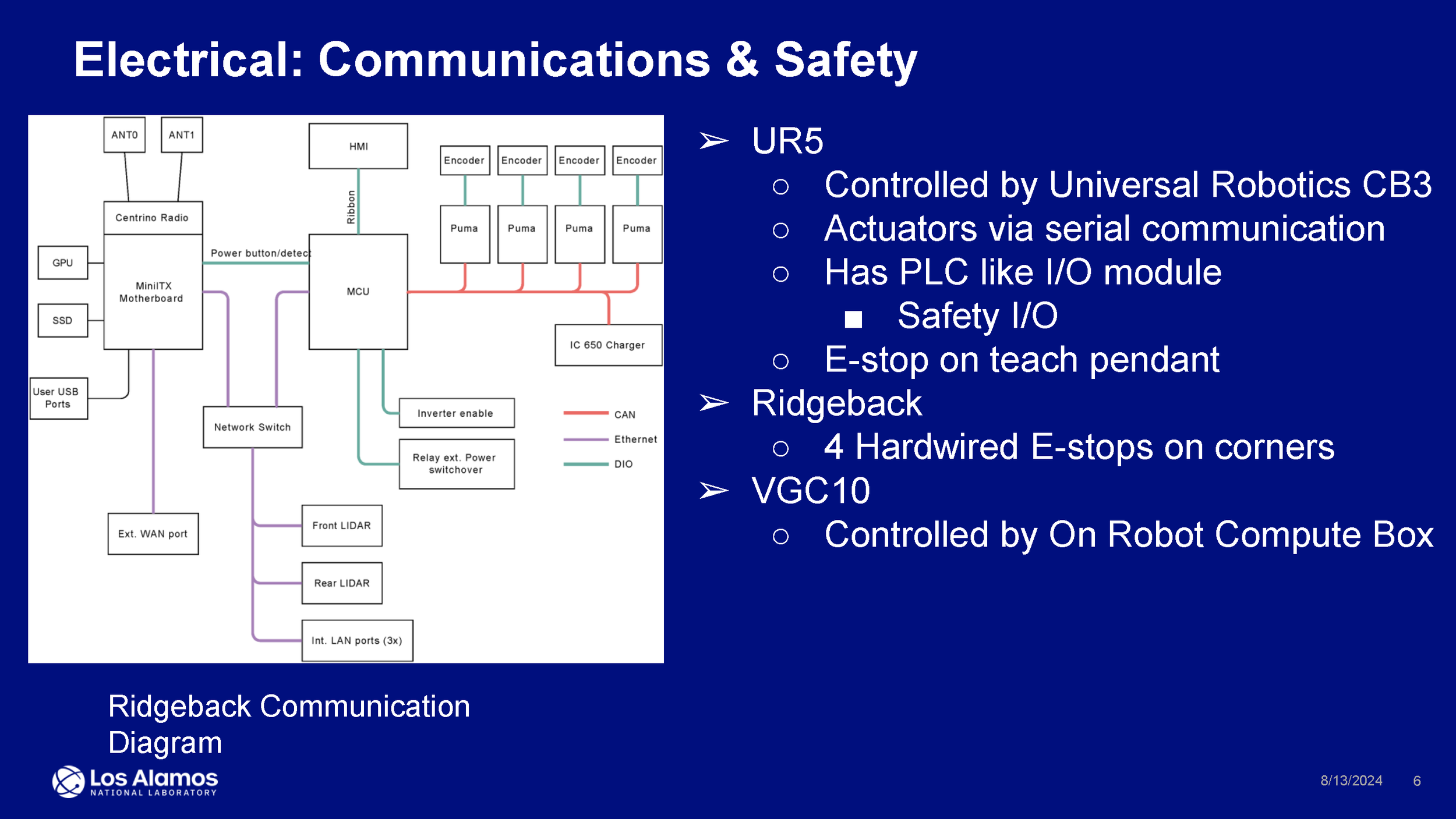
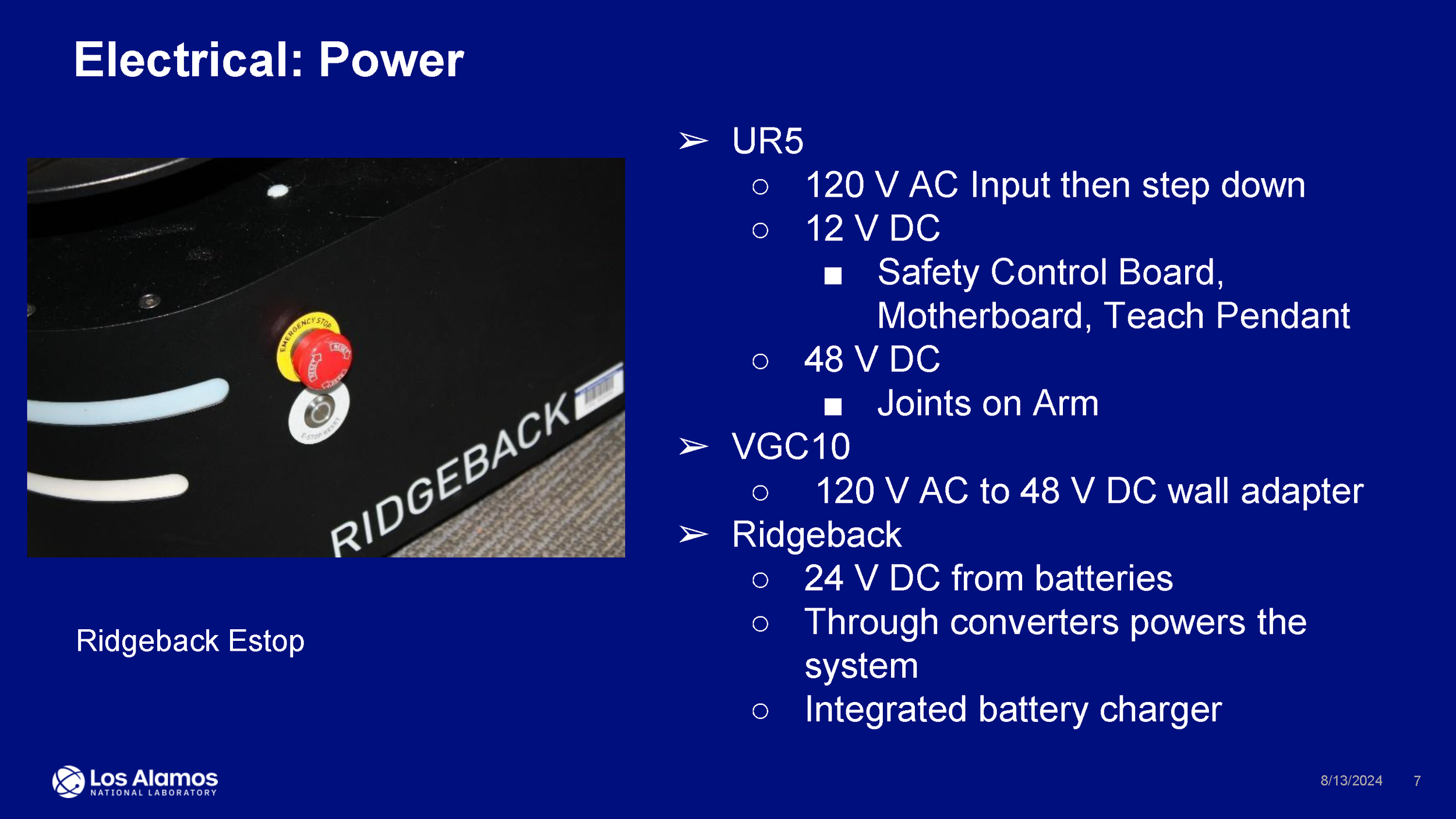
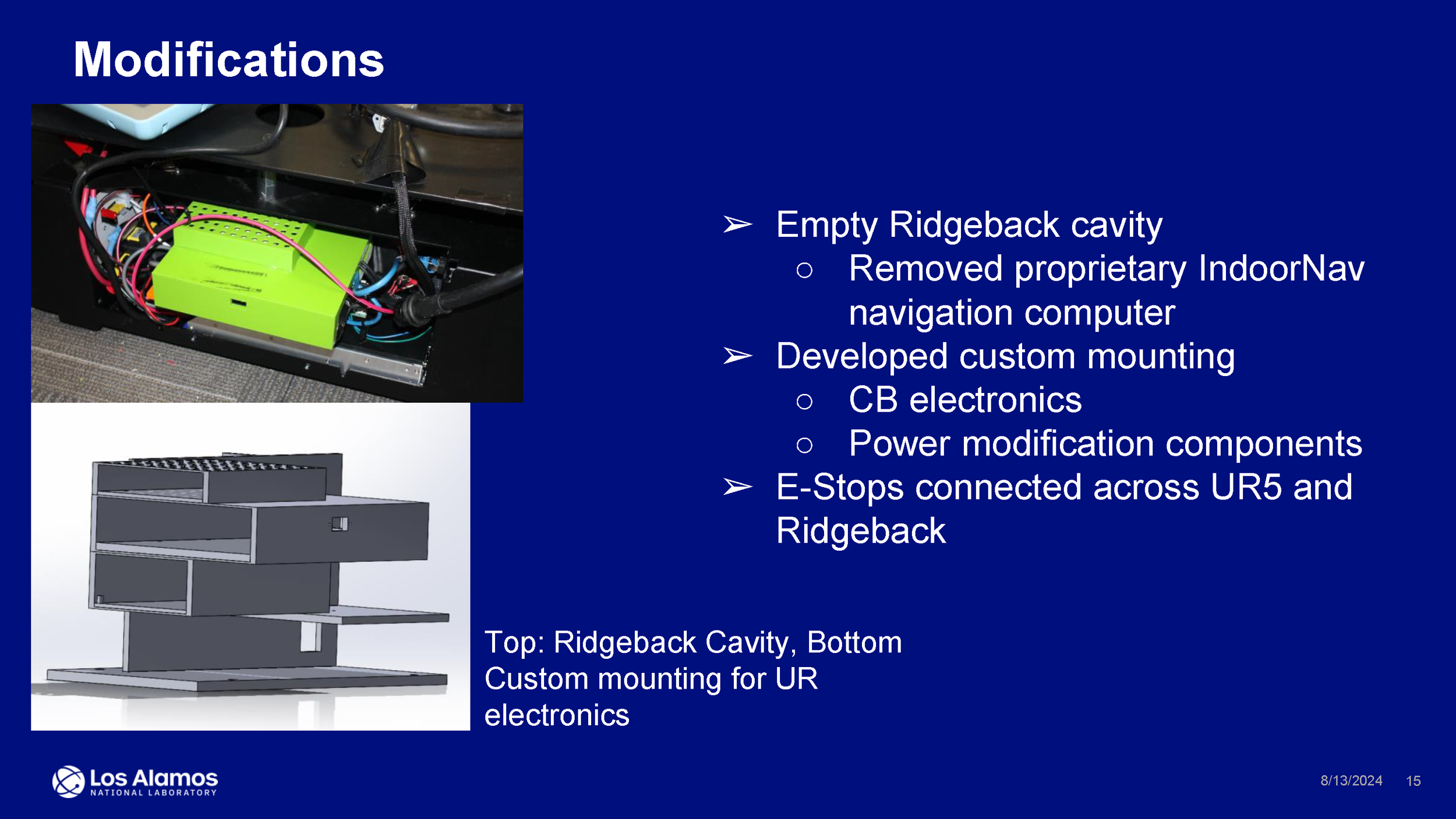
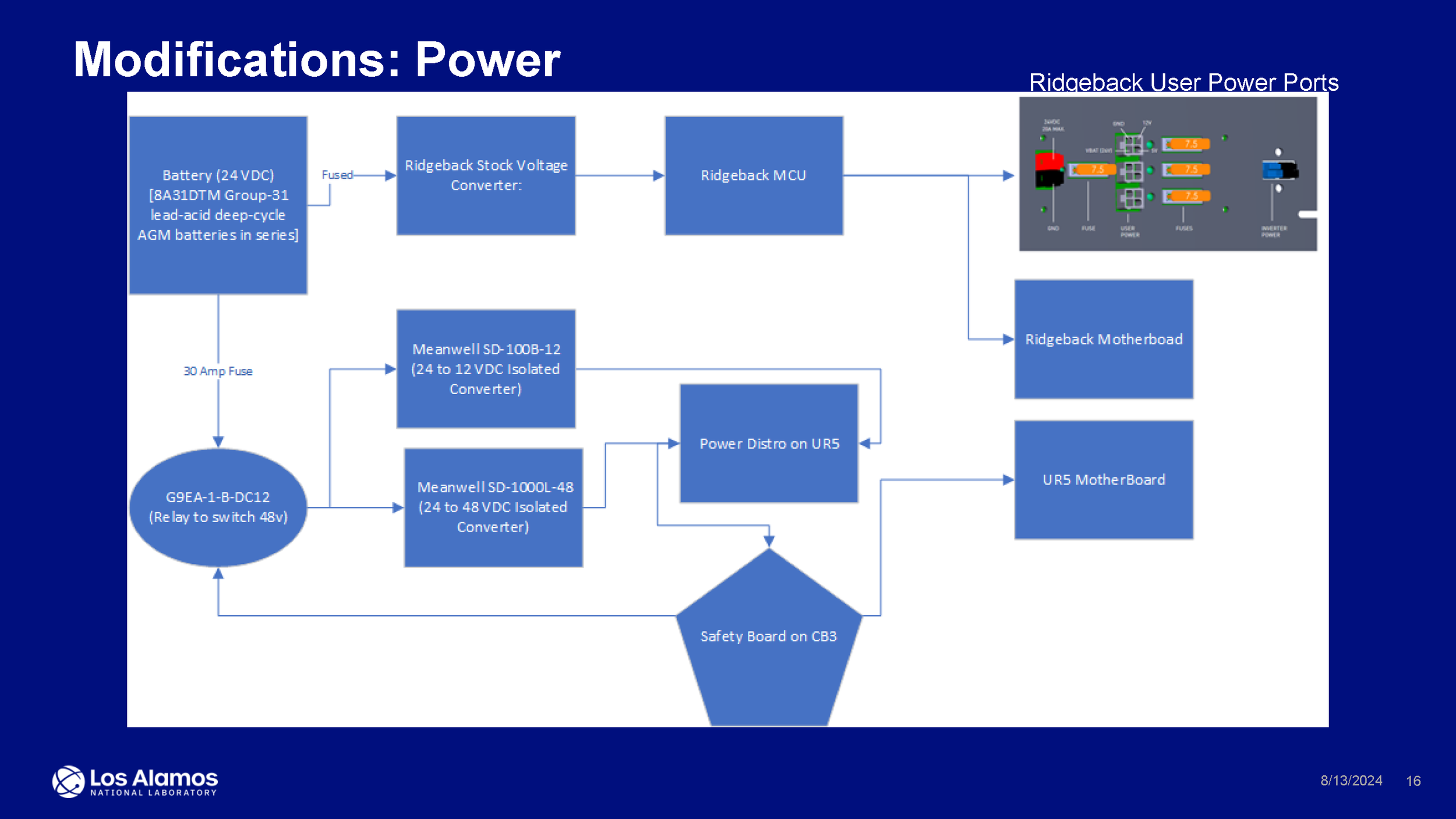
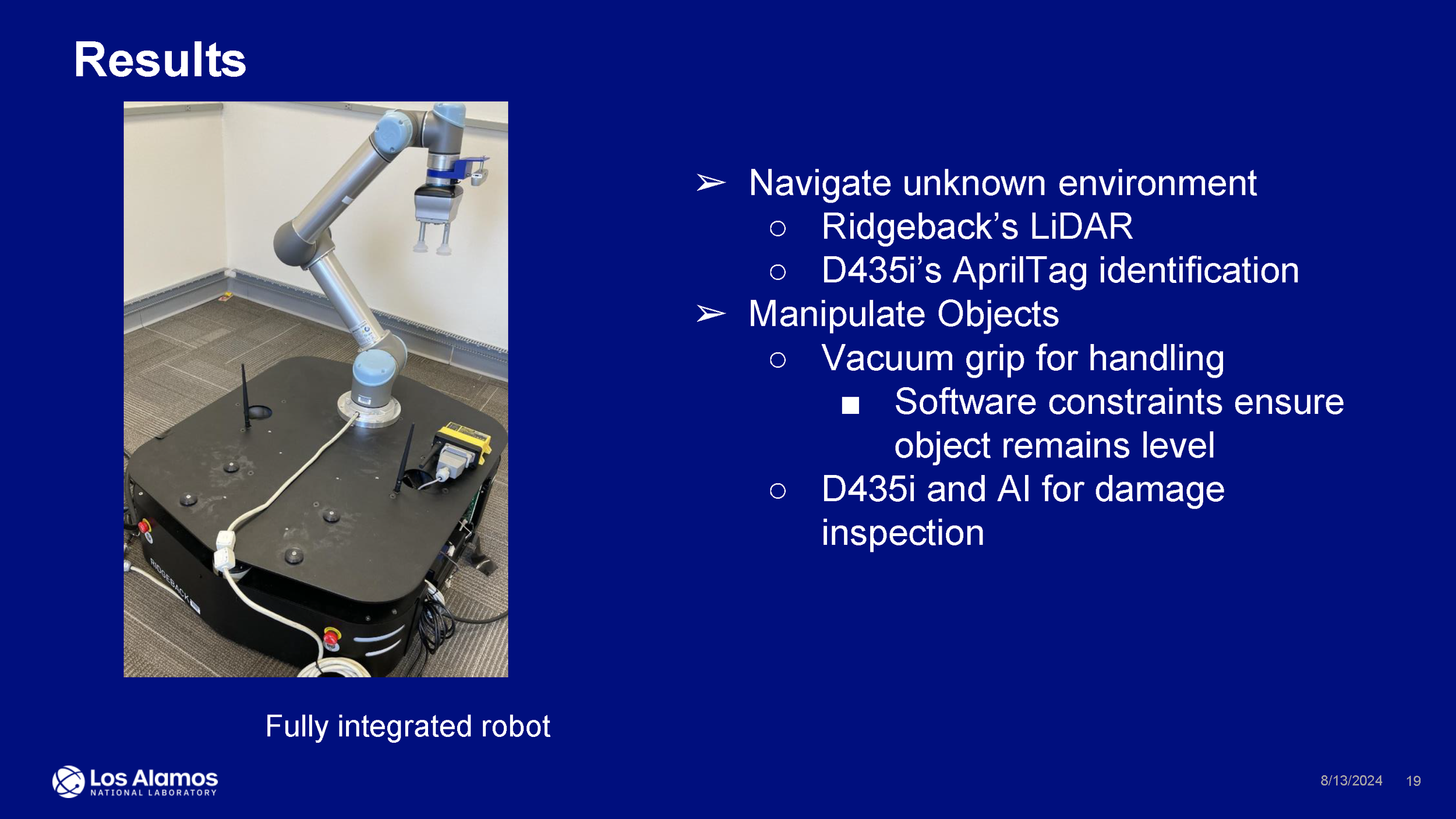
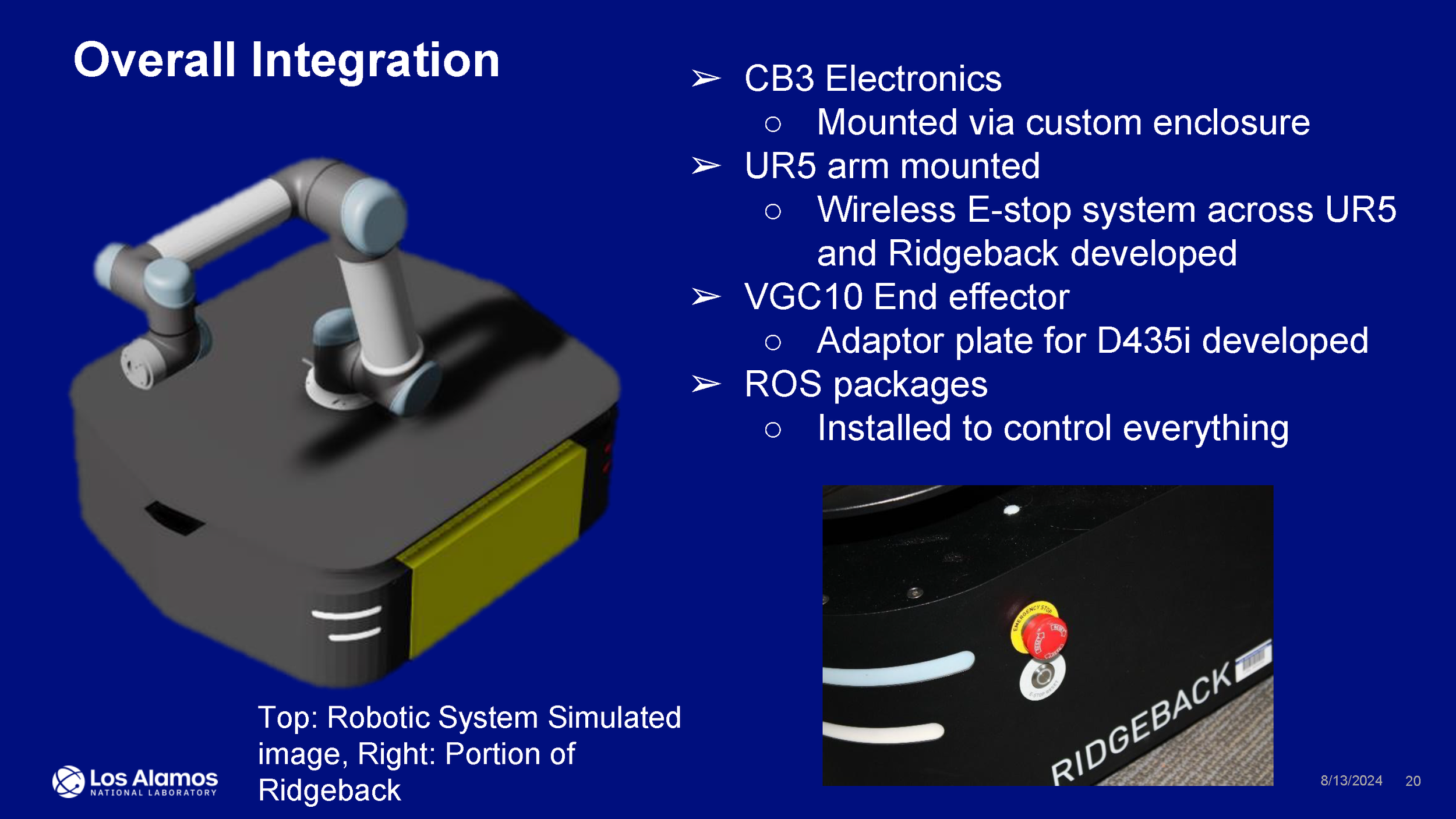
Electrical and mechanical integration included mounting the UR5 control box electronics inside the Ridgeback. This required disassembling the control box and designing custom mounting brackets for each of the electronic components. To power the UR5 electronics, a battery tap was implemented providing power directly to the system. Originally, the UR5 was powered using a standard 120 V outlet. A new wireless emergency stop (e-stop) system was implemented that shuts down both robots instantaneously. The Ridgeback has four additional e-stop buttons, one on each corner of the robot that shuts down both robots. The UR5 has an independent e-stop on its pendant that only shuts down the arm. The UR5 arm is mounted on top of and toward the front of the Ridgeback.
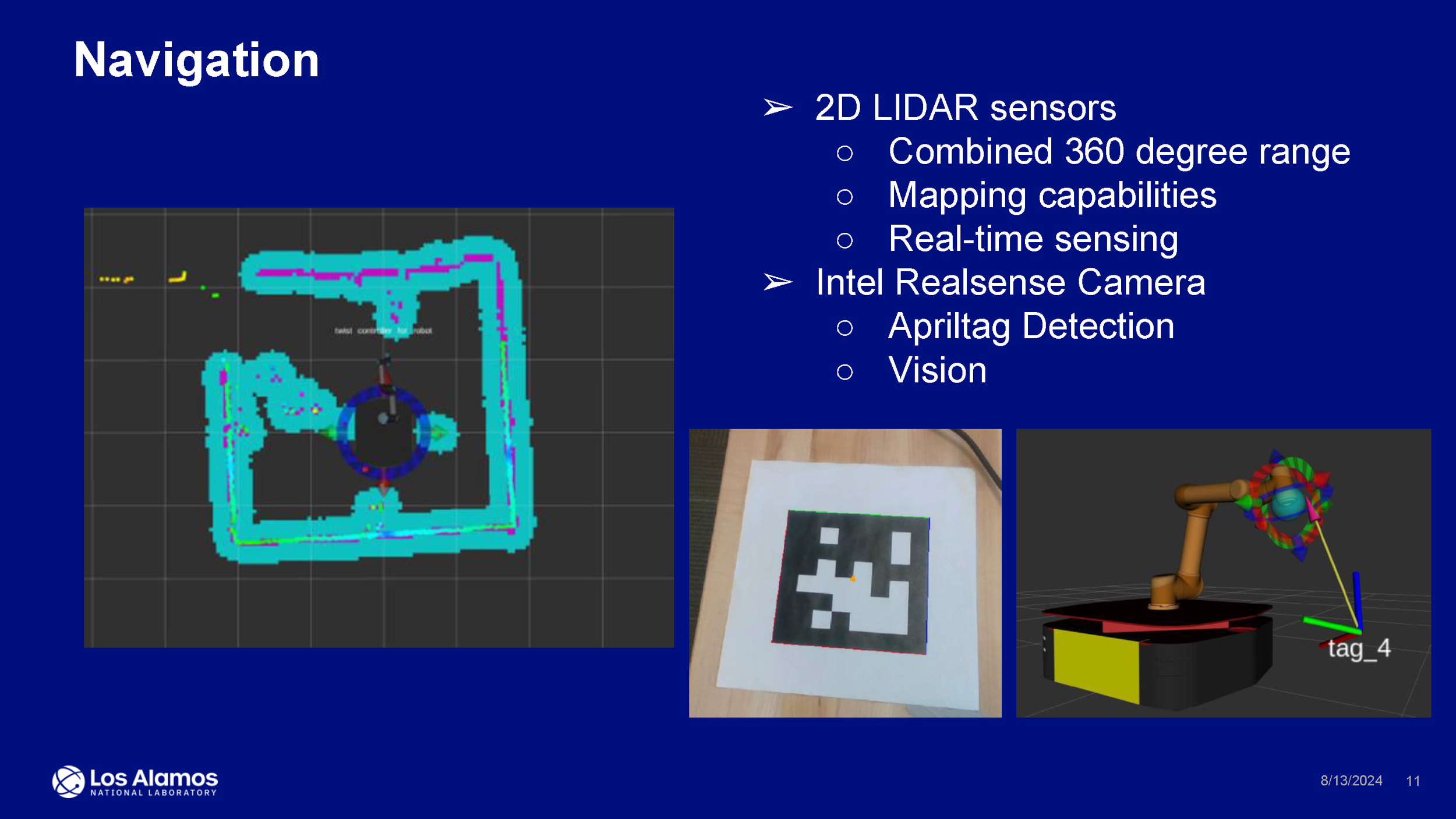
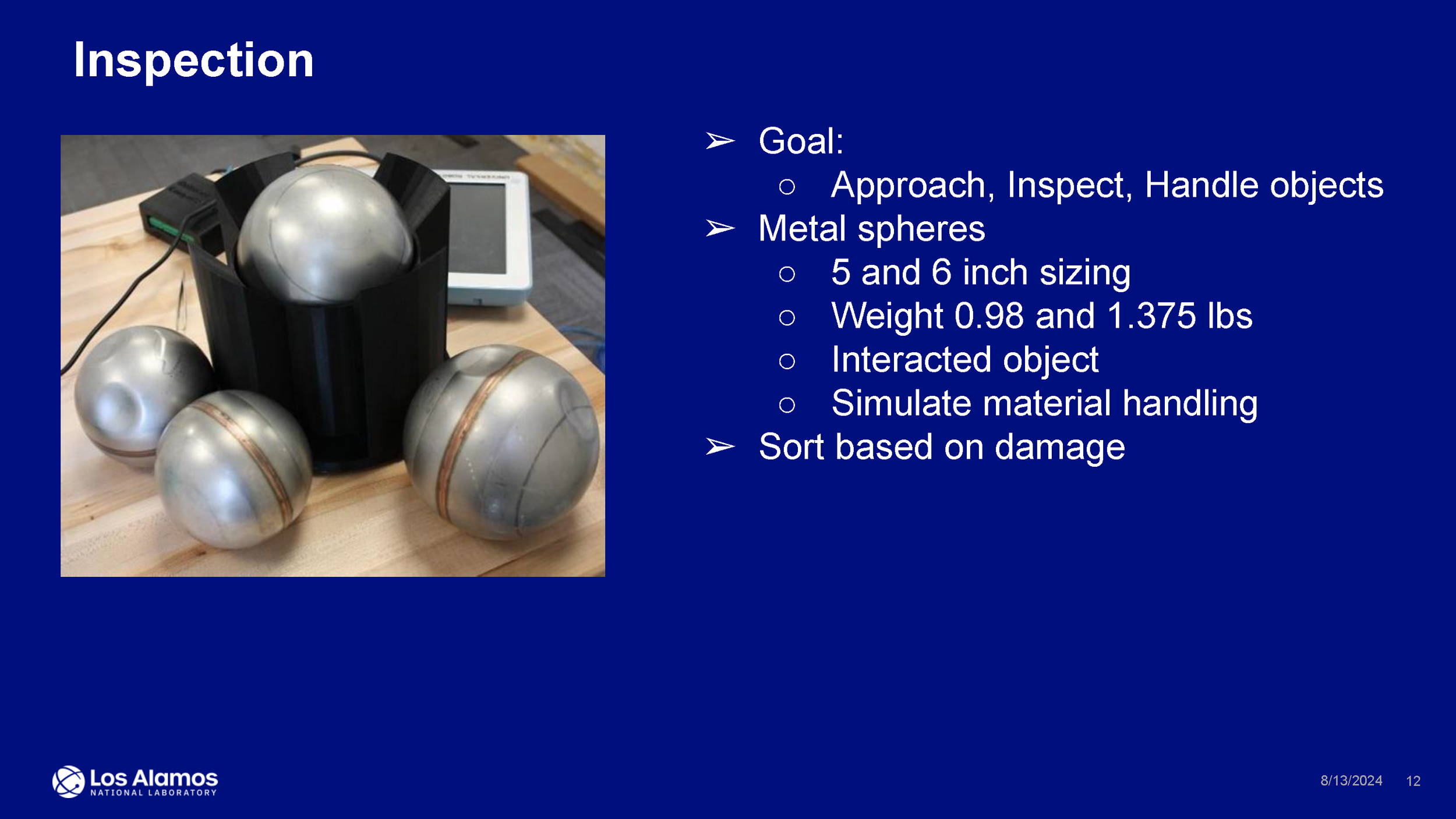
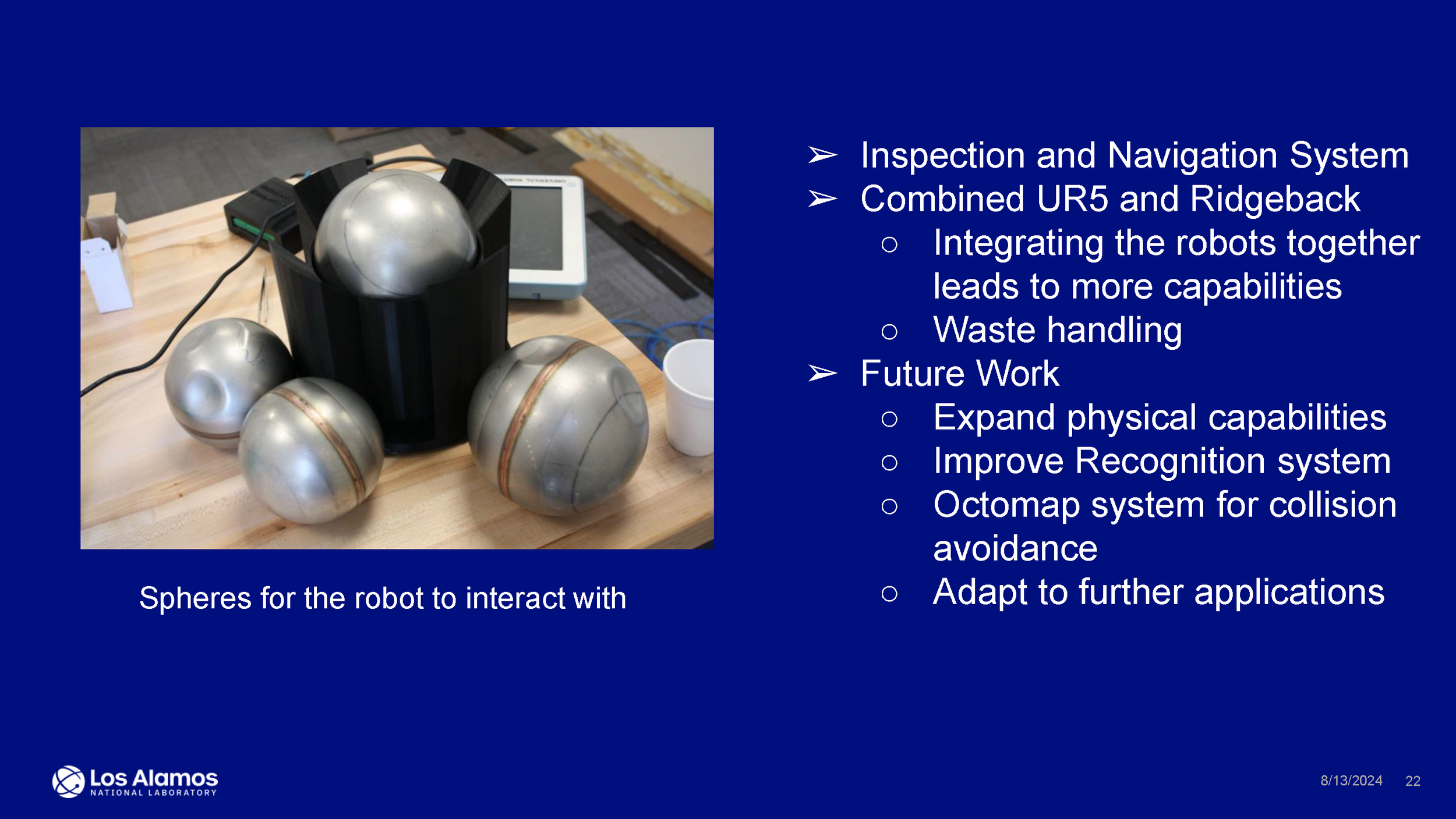
In the project demonstration, the Ridgeback with UR5 explores an unknown environment while avoiding obstacles until it locates a metal sphere. Spheres are inspected for damage and then sorted. Ridgeback exploration is facilitated by lidar and depth cameras. AprilTags are used to identify key
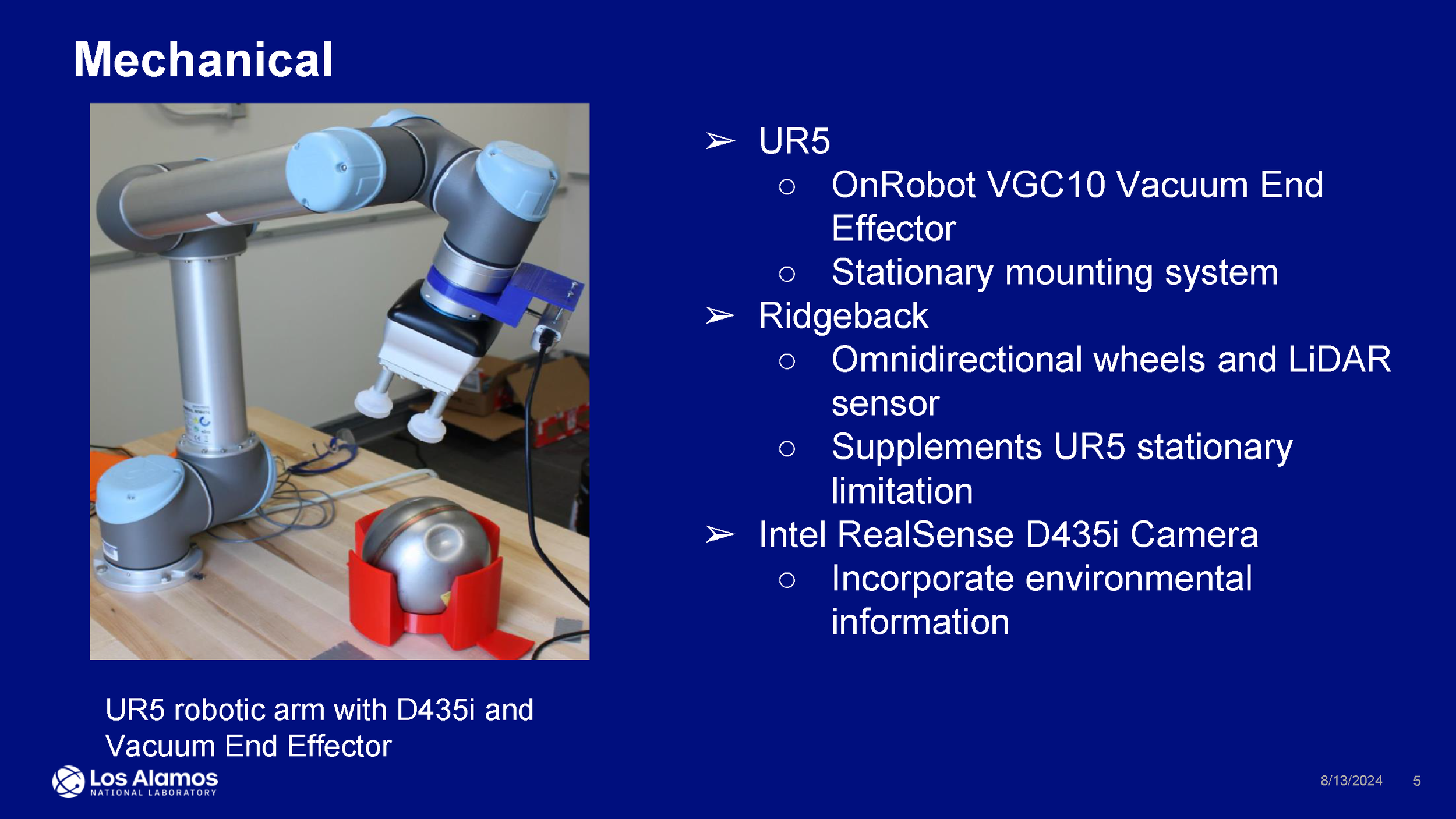
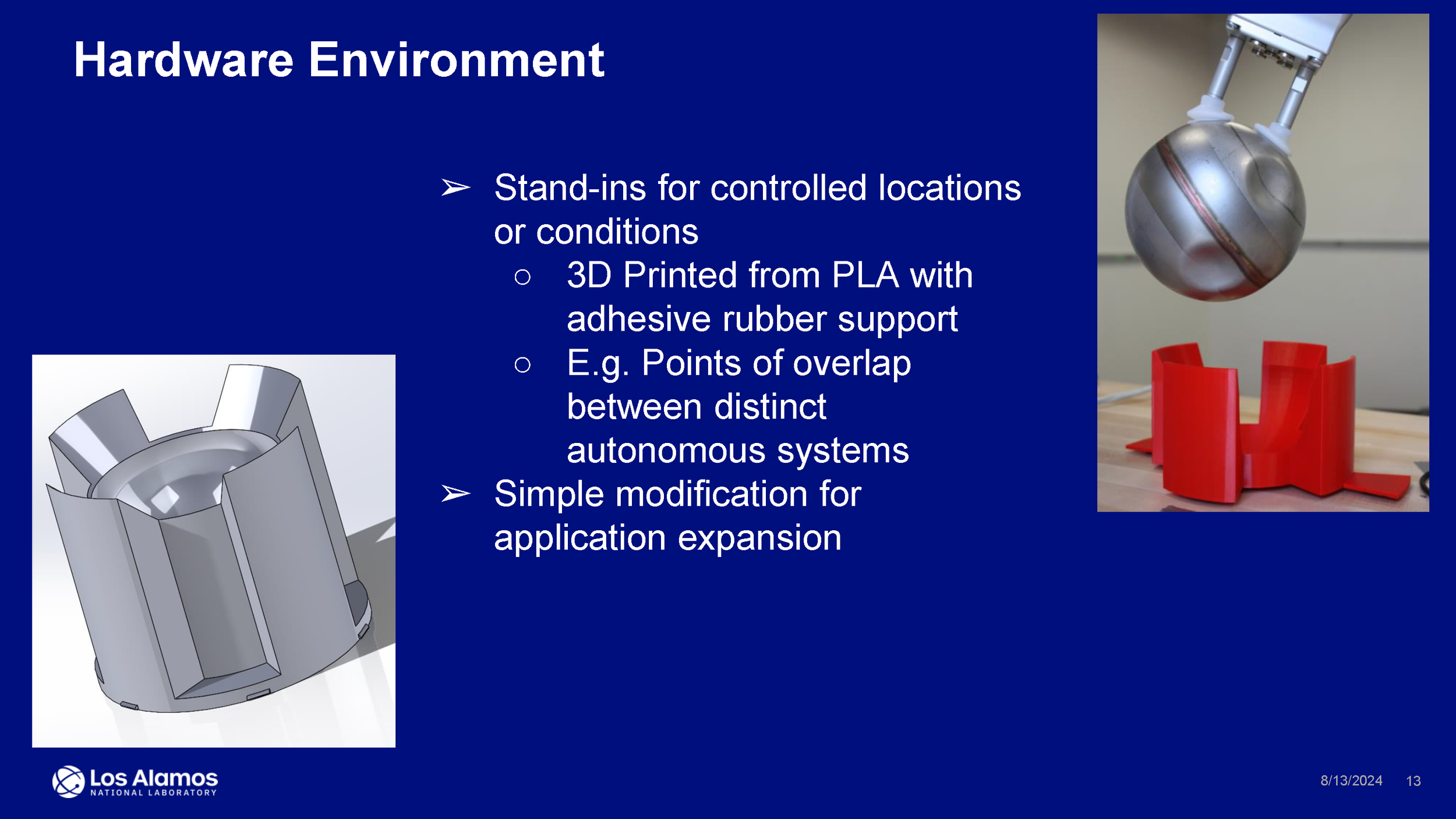
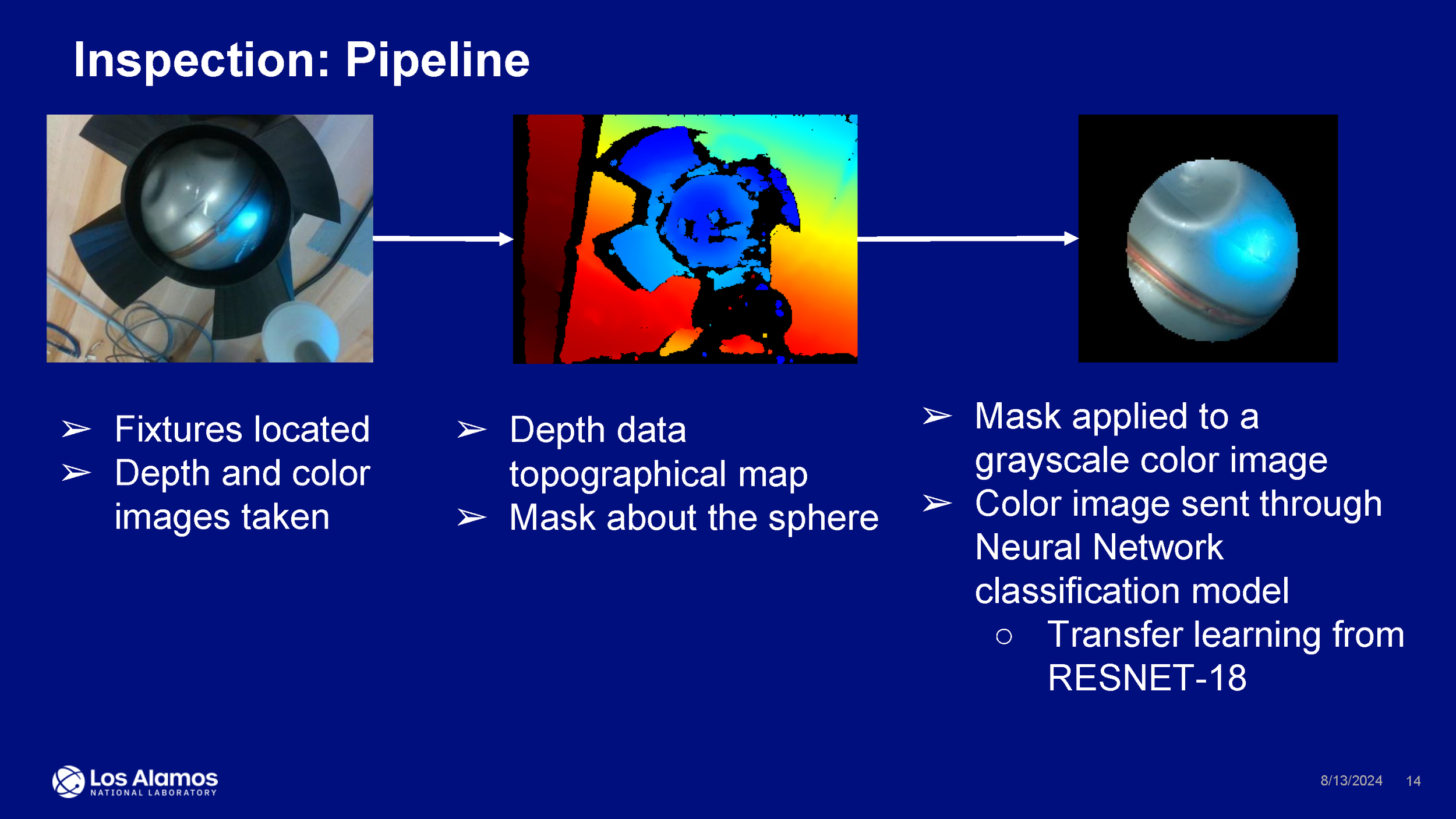
items, i.e. spheres, to facilitate dynamic interaction with an unknown environment. For inspection, the UR5 picks up the spheres using an OnRobot electric vacuum gripper. The UR5 then rotates the sphere in front of an Intel RealSense D435i depth camera. The spheres are sorted and placed in different locations based on the inspection results. Sorting is done using artificial intelligence and machine learning models that use transfer learning of a RESNET-18 convolutional neural network image classifier. Once sorting of the sphere is complete, the Ridgeback continues exploring the environment looking for more spheres.
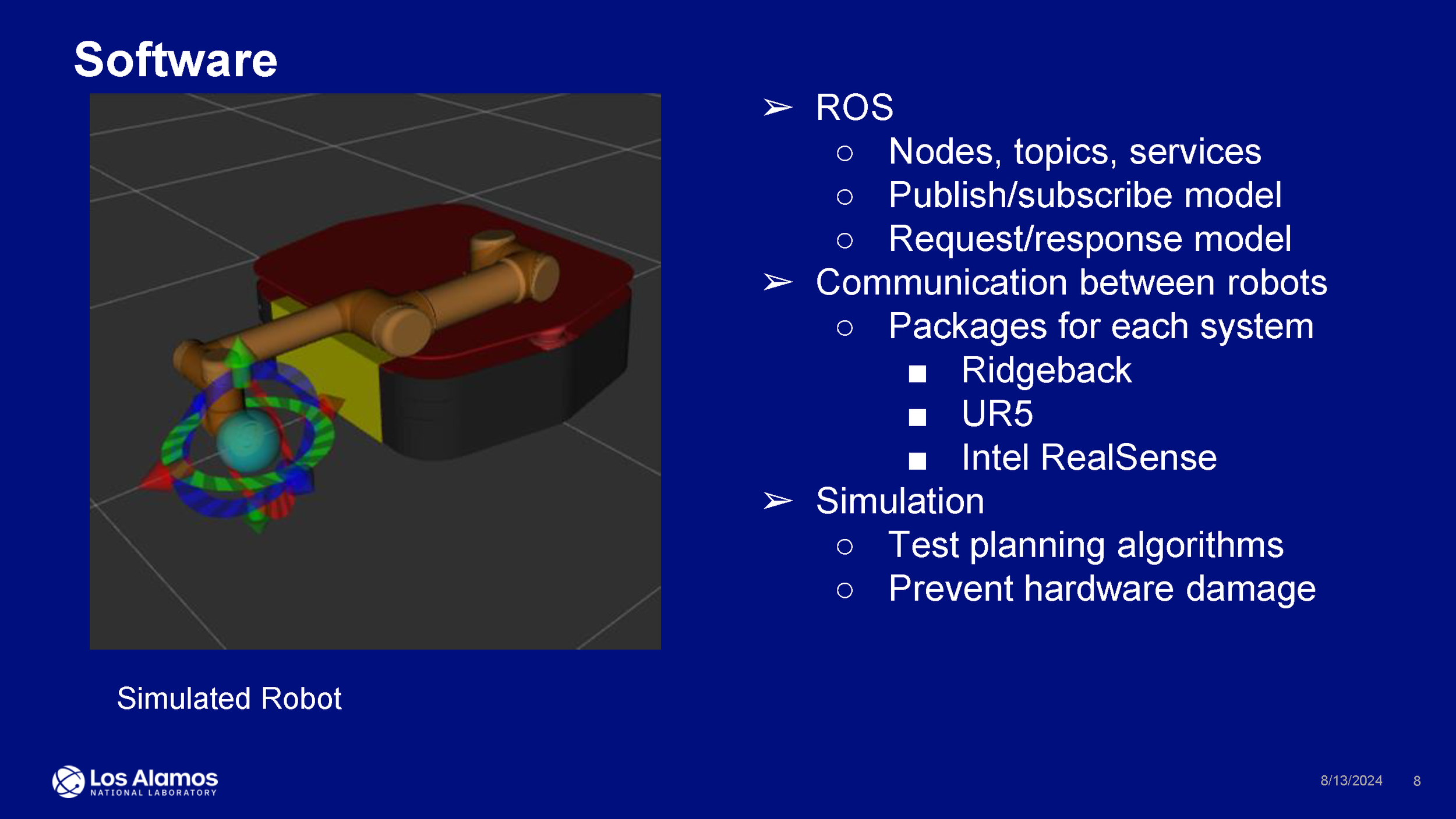
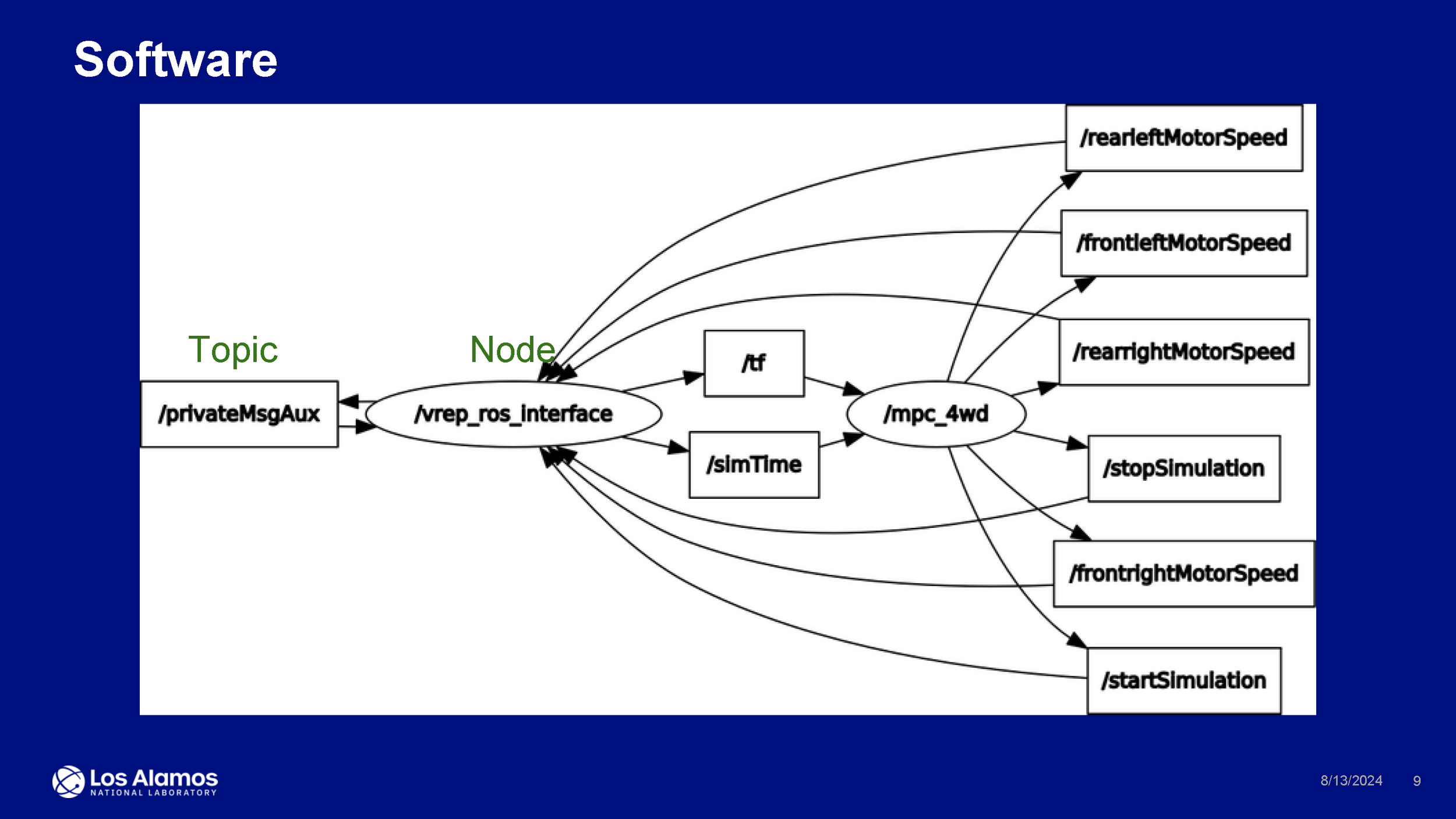
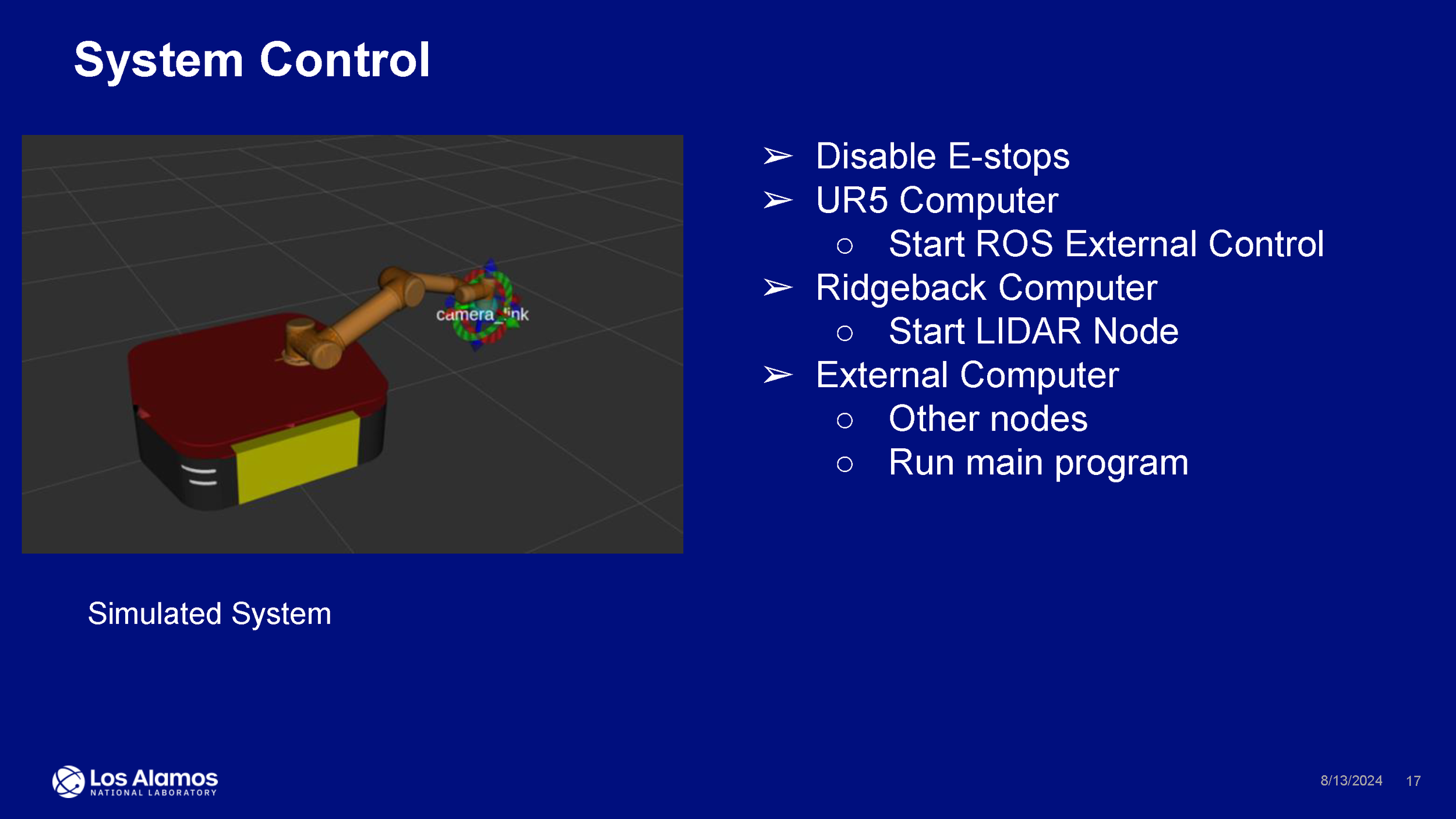
A software system was developed to run the autonomous demonstration. The primary tool used to achieve this is the Robotic Operating System (ROS), which is open-source software.Communication between the different systems is done using nodes, topics, and other ROS communication mechanisms. Each system is a different node written in python or C++. Topics are the communication channels nodes use to communicate with each other. While ROS is not commonly used for industrial applications, it provides a rapid developing system that can aid in quickly testing new capabilities. ROS also allows for the integration of AprilTags and an Octomap created using the lidar camera. Simulation of the integrated system is done in RViz for testing prior to physical deployment.
The efforts of this project show that the integrated Ridgeback with UR5 can navigate and interact with the environment successfully. Mobile material handling and inspection can be done autonomously which will reduce worker hazards.
LA-UR-24-28748